Start every Socket from a Better Shape
A great prosthetic socket starts with accurate shape capture.
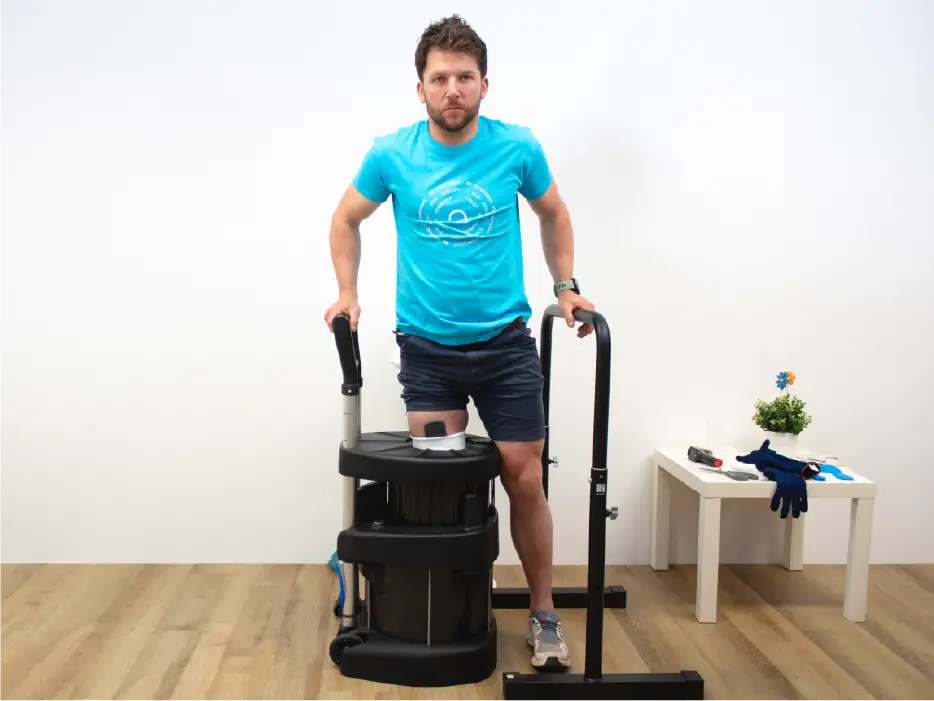
Majicast helps clinicians capture the residual limb under hydrostatic weight-bearing conditions, supporting different clinic fitting workflows and broader prosthetic pathways.
By combining weight-bearing methodology, soft tissue control, and controlled volume matching, Majicast creates a stronger starting point for socket fit, comfort, and functional stability.
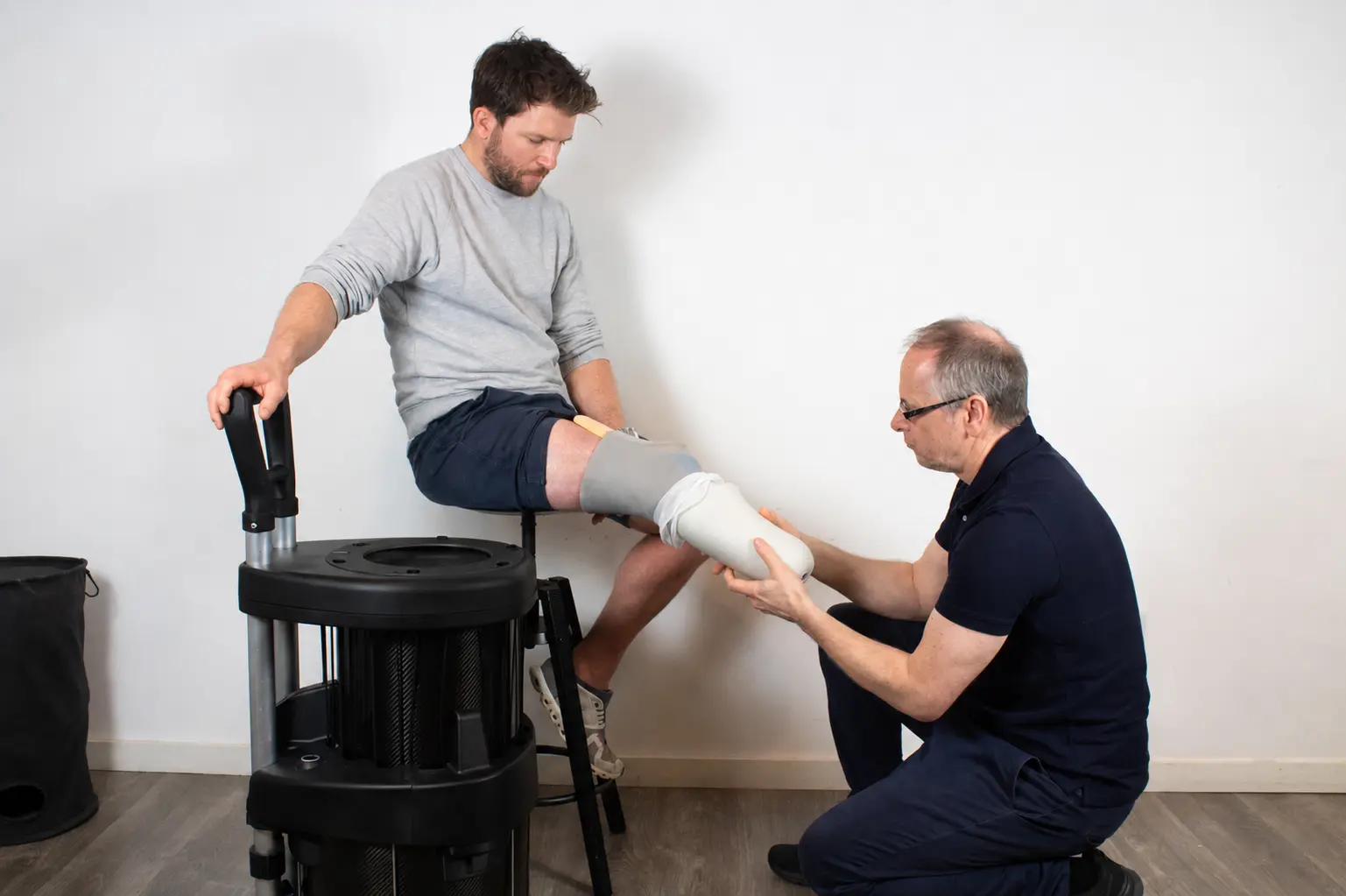
How Majicast Works
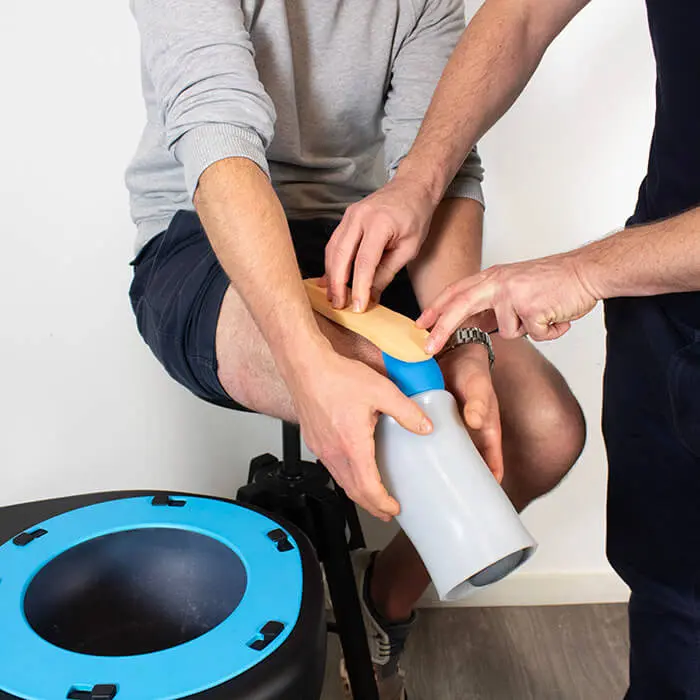
Residual limb Preparation
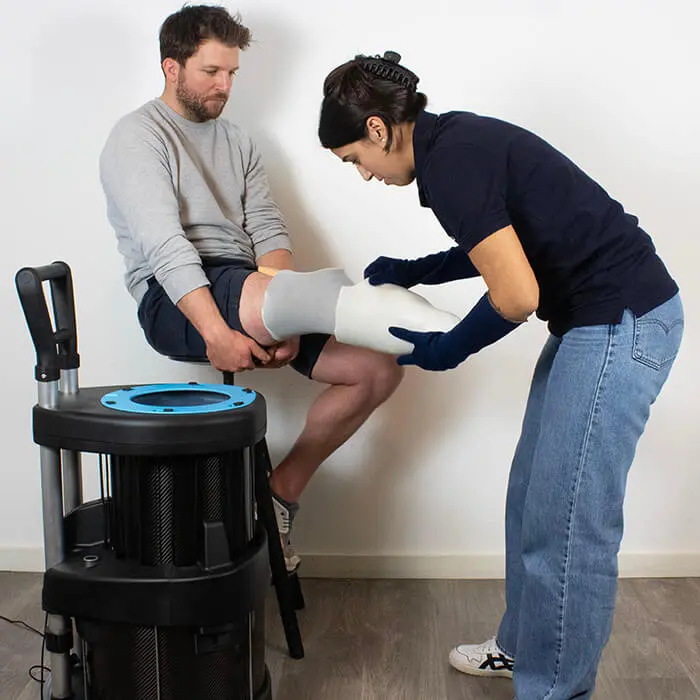
Fitting the Socket
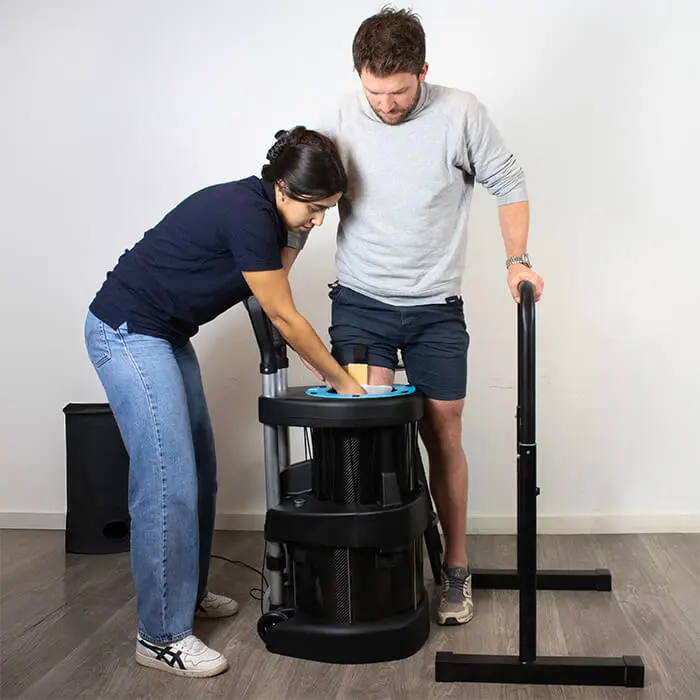
Positioning on Majicast and Hydrostatic Fitting
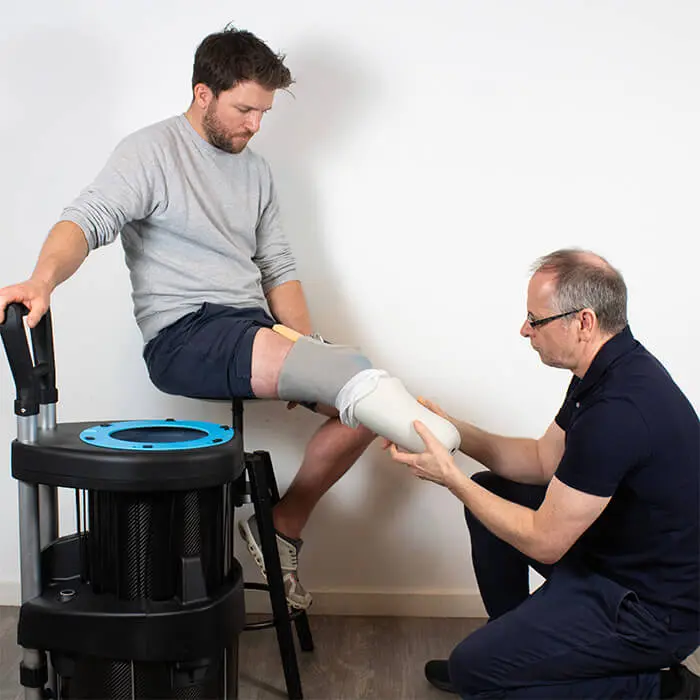
Removing and Finishing the Socket
Advantages of Majicast
Hydrostatic weight-bearing capture
Captures limb shape under load achieving relevant fitting position
Soft tissue control
Helps manage distal tissue and volume during shape capture

Direct-fit pathway support
Connects shape capture to Amparo direct-fit socket pathways
Digital integration
Supports scanning and 3D documentation after shape capture

Useful for primary patients
Supports clinical pathways where residual limb change quickly

Repeatable workflow
Reduces dependence on fully manual fitting methods
Why Hydrostatic Weight-Bearing is important?
The residual limb behaves differently when unloaded than it does when the patient stands. Under weight-bearing conditions, soft tissue shifts, pressure areas become clearer, and the limb takes a more functional shape.
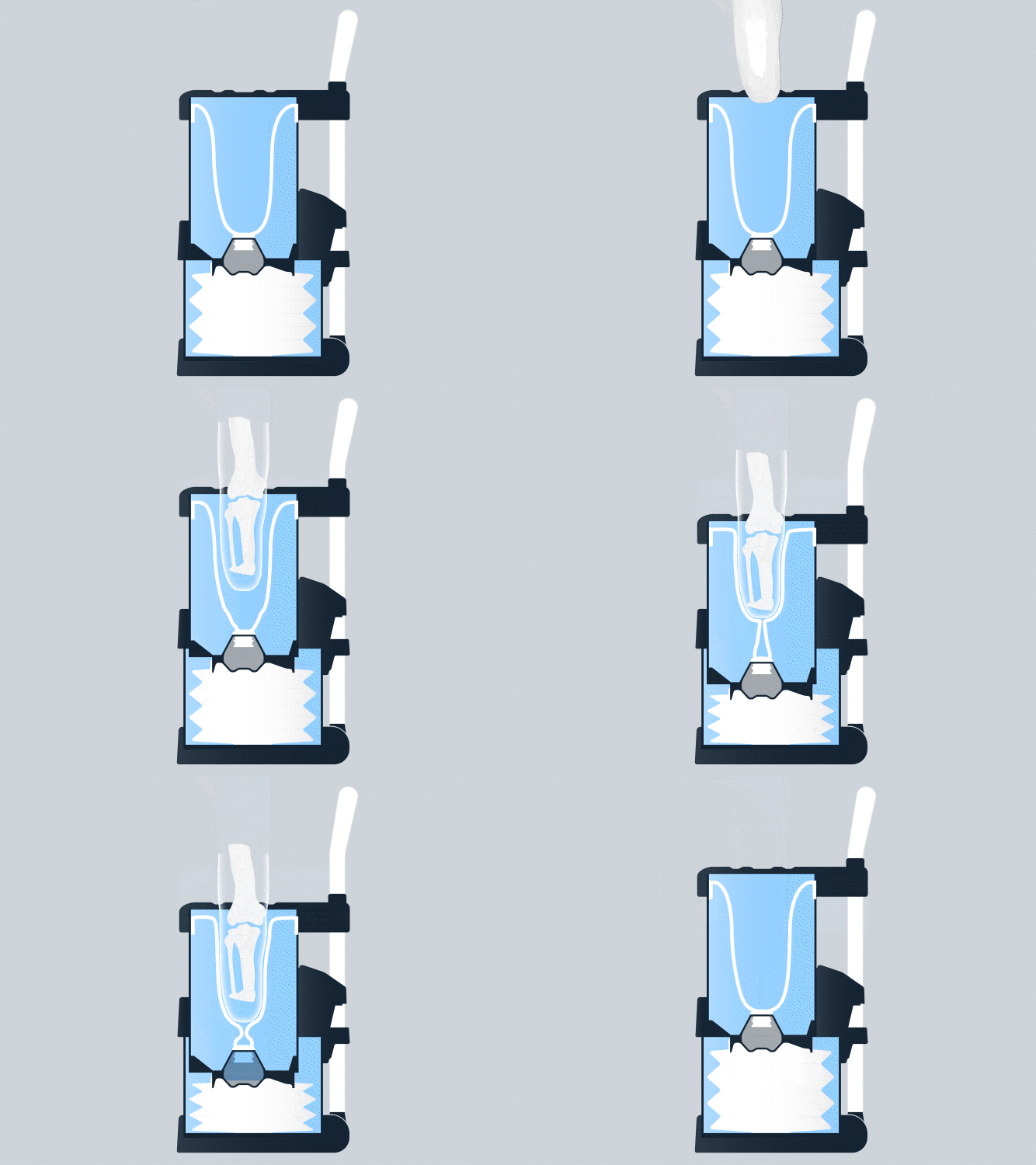
Majicast uses hydrostatic pressure under load to shape the residual limb by matching volume and creating uniform pressure. This gives clinicians a stronger starting point for prosthetic socket fitting, supporting better pressure distribution, stability, comfort, and function.
Explore the Engineering Behind Hydrostatic weight-bearing
Better socket fit is not only about comfort. It is about load transfer, pressure distribution, tissue safety, and functional stability. Read the University of Strathclyde white paper to learn how hydrostatic shape capture and engineering principles can support improved lower-limb prosthetic care.
Shape Capture That Supports Better Fitting Decisions
Majicast improves the first step of prosthetic socket fitting: residual limb shape capture.
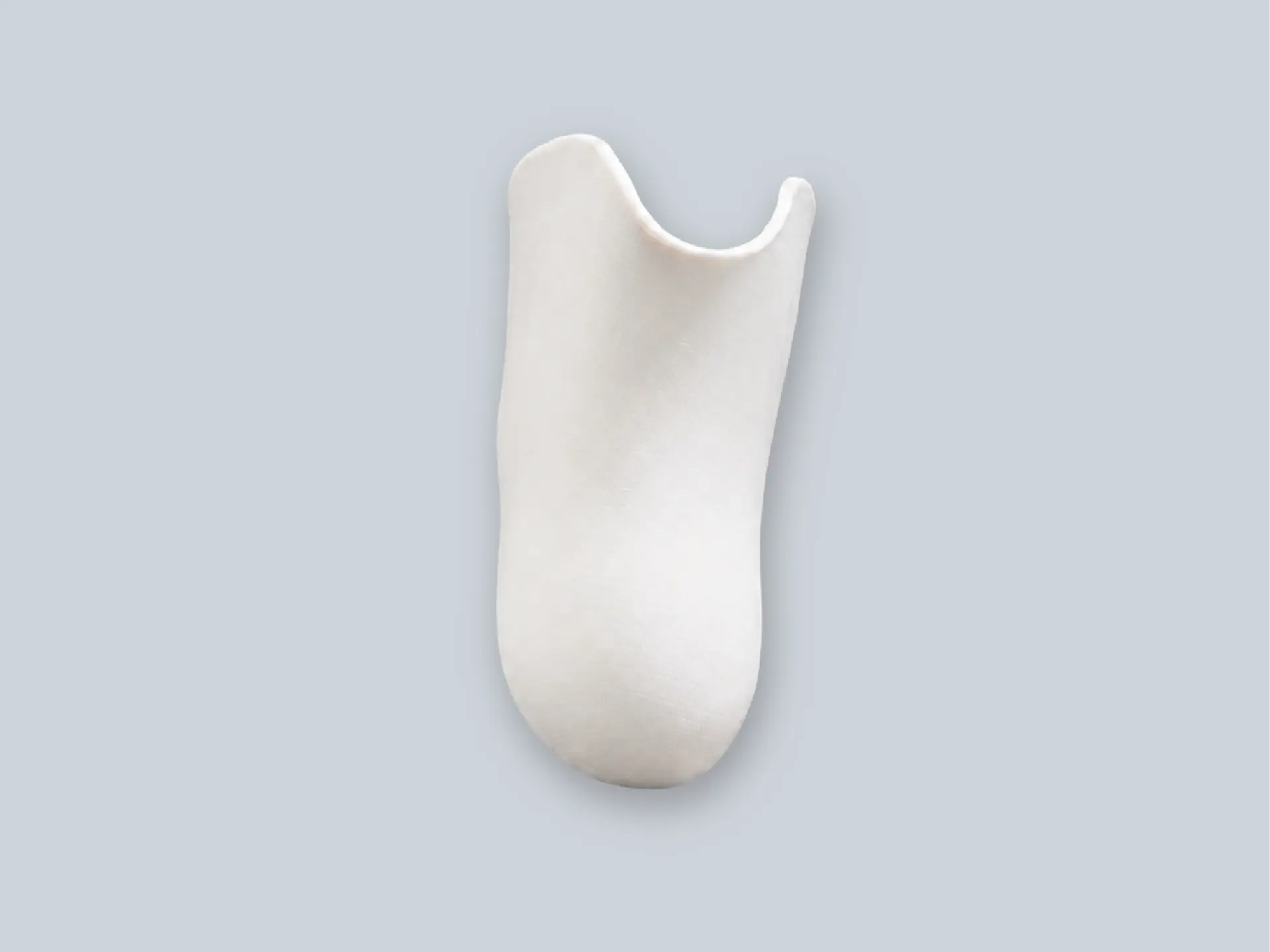
By capturing the residual limb under weight-bearing conditions, Majicast helps clinicians assess limb geometry, soft tissue behaviour, and volume under load before selecting the next stage of care.
As part of the Amparo System, Majicast can support adaptive rehabilitation sockets and digital documentation through 3D scanning.
From Shape Capture to Digital Workflow
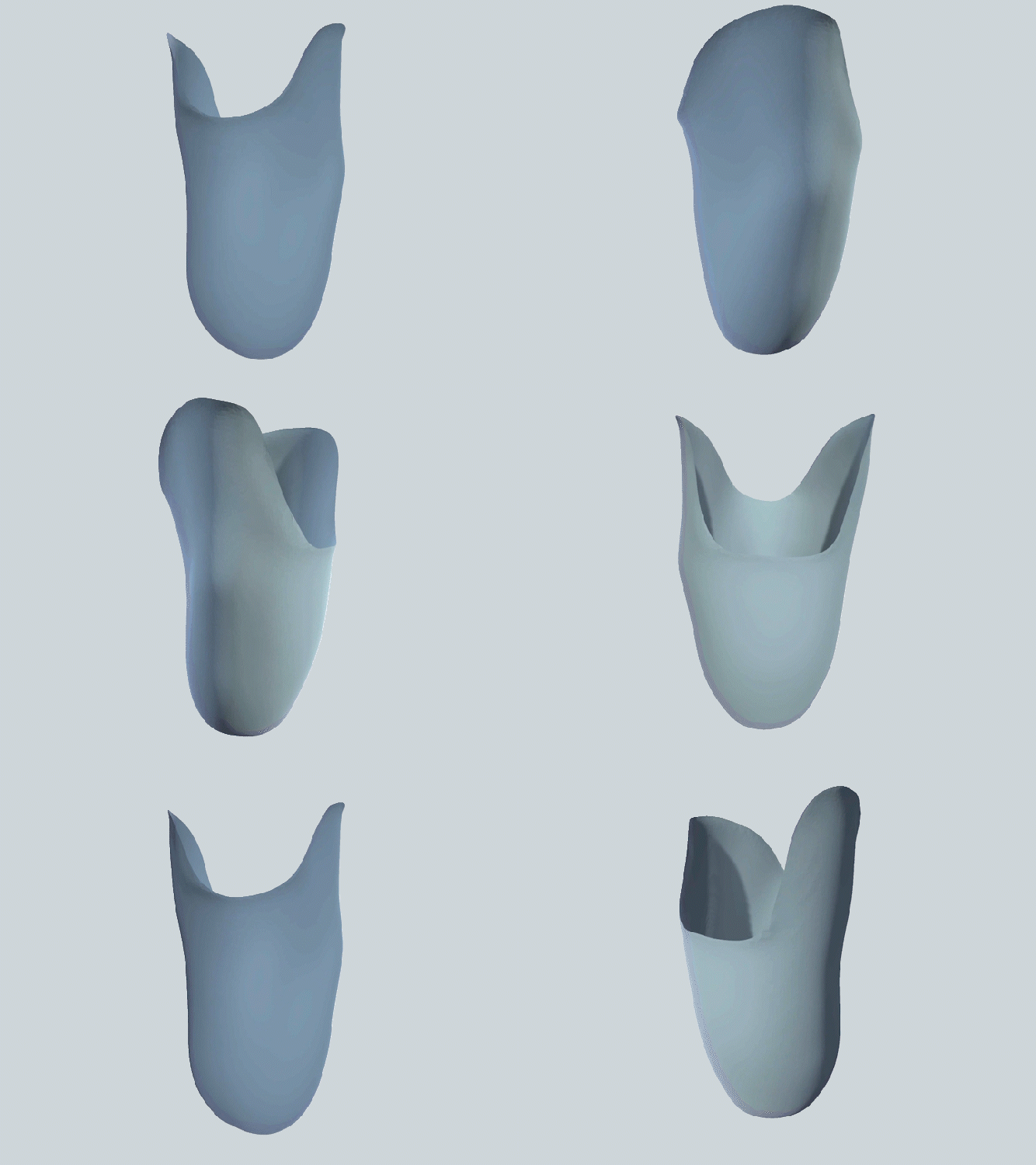
Create a controlled weight-bearing impression with Majicast, then scan the captured socket or shape into a 3D model for documentation, CAD/CAM workflows, training, or case review.
Majicast helps bridge hands-on clinical fitting with digital prosthetic workflows, giving teams a clearer record of the shape captured under load.
Distal Control for Better Socket Geometry
Soft tissue moves under load. Without distal tissue control during shape capture, socket geometry can become harder to refine.
Majicast helps manage distal tissue during hydrostatic weight-bearing shape capture by supporting tissue elongation and volume control.
This gives clinicians a more clinically useful starting shape, especially for primary patients, sensitive tissue, or residual limb volume change.
What Clinicians and Users Say About Majicast

Stuart Croxford
Below knee amputeeBeing fitted for a full-contact socket in one appointment, giving direct feedback to clinicians, making quick adjustments, and leaving with a new socket on the same day has been a game changer.

Michael Taylor
CPO @AmparoDistal tissue control is critically important in prosthetic casting because it ensures accurate shaping and support of the residual limb’s distal end within the socket. Proper control of distal tissues helps distribute pressure evenly, reduce the risk of skin breakdown, and support overall prosthetic function.
Stuart Croxford
Below knee amputeeBeing fitted for a full-contact socket in one appointment, giving direct feedback to clinicians, making quick adjustments, and leaving with a new socket on the same day has been a game changer.
Michael Taylor
CPO @AmparoDistal tissue control is critically important in prosthetic casting because it ensures accurate shaping and support of the residual limb’s distal end within the socket. Proper control of distal tissues helps distribute pressure evenly, reduce the risk of skin breakdown, and support overall prosthetic function.
See how Majicast fits into your clinic
Whether you want to improve shape capture, standardise fitting across clinicians, support primary patients, or connect direct-fit care with digital workflows, Majicast can help you start from a better shape.
Downloads
Technical Information
Benefit from tax-free shopping, simplifying your purchase and enhancing your savings without any extra costs.
User Guide
Benefit from tax-free shopping, simplifying your purchase and enhancing your savings without any extra costs.
Catalogue
Benefit from tax-free shopping, simplifying your purchase and enhancing your savings without any extra costs.
Frequently asked questions
Here are some common questions about Majicast
Majicast is Amparo’s hydrostatic weight-bearing shape capture tool. It helps clinicians capture residual limb shape under load as part of a more controlled and repeatable prosthetic fitting workflow.
It is a method of capturing residual limb shape while the patient applies load through the limb. Majicast uses water-based hydrostatic pressure to support even contact around the limb during shape capture.
Because the residual limb can behave differently under load than it does in a non-weight-bearing position. Capturing shape under load helps clinicians start from a more functional fitting position.
No. Majicast is the shape capture and fitting method within the Amparo System. The socket pathway is selected separately, depending on the patient, clinic workflow, and stage of care.
Majicast can support Amparo direct-fit pathways, including Trust Socket and Resilience Socket, depending on the clinical indication and fitting goal.
Yes. Majicast can be especially useful where residual limb volume, tissue presentation, and fit needs are changing during early rehabilitation.
Yes. After shape capture, the captured socket or shape can be scanned for 3D documentation, CAD/CAM workflows, or clinical review.
No. Majicast supports clinician decision-making by bringing more structure and repeatability to the shape capture step. The clinician remains central to fitting, assessment, and socket refinement.
Majicast is designed for clinical and mobile use. It does not require complex lab infrastructure and can support treatment rooms, outreach programmes, and mobile fitting settings.
Book a meeting with the Amparo team. We can review your current fitting methods and show how Majicast can support your direct-fit, in-clinic, or digital workflow.